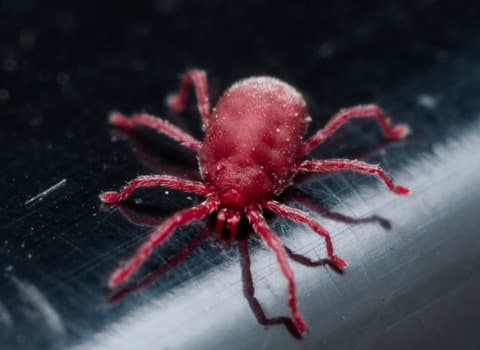
What do Clover Mites look like?
Clover mites or as they are commonly known as “tiny red bugs,” are distinctly red in color and about the size of a pinhead. For the size of their body they have very long front legs.
Having trouble with Clover Mites?
Are clover mites dangerous?
Clover mites do not bite or sting and are not dangerous to humans. They can however cause damage to your home and belongings; if they become accidentally crushed they will leave a red stain behind on things like furniture, walls, carpets and curtains.
Why do I have a clover mite problem?
Clover mites are generally found outdoors feeding on grasses, clover and dandelions, but they are sensitive to temperatures and will be drawn to the outside of your home or building where the sun hits. As they are crawling up your home looking for warmth they will make their way inside through cracks and crevices found on the exterior of your home or building.
How do you get rid of clover mites?
At Thomas Pest Services, we can help you get rid of clover mites with effective pest control service. In fact, we offer relief from clover mites and other household pests with residential pest control in Albany, throughout the Capital District as well as the Adirondack region. Contact us today to learn more!
Clover mite prevention tips
To prevent clover mites and other pests from invading your property you should:
- Trim back grass and other vegetation from the exterior of the structure.
- Install a rock barrier between and exterior foundation.
- Seal visible cracks and crevices in your home’s or building’s exterior, replace broken or damaged siding.
- Caulk gaps around windows and doors, and replace torn or ripped screens.

Fast Service

EXPERIENCED

Family Owned

Guaranteed
What are clover mites?
Clover mites are tiny, reddish-brown arachnids that are commonly found around homes in New York during spring and fall.
They are extremely small—often about the size of a pinhead—and can appear in large numbers on:
· Siding
· Foundations
· Window frames
· Doors
· Sunny exterior walls
· Patios and walkways
Although they may look alarming, clover mites are considered a nuisance pest and do not pose a threat to people or pets.
Are clover mites dangerous to humans or pets?
No. Clover mites do not:
· Bite people
· Sting pets
· Spread diseases
· Damage furniture
· Cause structural damage
The main concern with clover mites is that they can enter homes in large numbers and leave reddish stains if crushed.
What do clover mites look like?
Clover mites are:
· Tiny (about the size of a pinhead)
· Reddish-brown in color
· Eight-legged
· Often found in groups
One identifying feature is their front pair of legs, which are much longer than the others and can look like antennae.
Because they are so small, homeowners often mistake clover mites for other pests.

How can I tell if I have clover mites in my home?
Common signs of clover mites include:
· Tiny red or brown specks moving along windowsills
· Large groups of mites on siding or foundations
· Activity around sunny windows and doors
· Red smears left behind when crushed
Unlike many insects, clover mites do not typically hide in food, furniture, or clothing. They usually enter homes from exterior areas.
Why are clover mites coming into my house?
Clover mites usually enter homes while searching for shelter from changing weather conditions.
Common reasons they appear include:
· Grass and vegetation touching the foundation
· Heavy lawn fertilization
· Warm, sunny exterior walls
· Cracks and gaps around windows and doors
· Dense landscaping near the home
Homes surrounded by lush lawns and landscaping may be more likely to experience clover mite activity.
When are clover mites most active in New York?
Clover mites are most common during cooler seasons, especially:
Spring
· Increased activity as temperatures warm
· Movement toward sunny areas around homes
Fall
· Seeking shelter before colder weather arrives
· Increased attempts to enter homes
Weather conditions can impact activity levels from year to year.
How do I get rid of clover mites inside my home?
If clover mites are already indoors:
· Vacuum them carefully
· Avoid crushing them, which can stain surfaces
· Remove visible activity around windows and doors
· Seal cracks and gaps where they may be entering
Indoor sprays often provide only temporary relief because the source of the problem is usually outside.
What is the best way to prevent clover mites?
The most effective prevention focuses on reducing access points and making the area around your home less attractive.
Helpful steps include:
· Maintain a vegetation-free zone around the foundation
· Trim grass, shrubs, and plants away from the home
· Seal cracks around windows, doors, and foundations
· Repair damaged screens
· Avoid excessive lawn fertilization near the foundation
· Keep mulch and landscaping materials away from exterior walls
Do clover mites damage lawns or plants?
Clover mites feed on plants and grasses but typically do not cause significant damage to established lawns.
Large populations can become a nuisance when they migrate from lawns and landscaping onto homes.
Can clover mites be mistaken for other pests?
Yes.
Homeowners often mistake clover mites for:
· Ticks
· Bed bugs
· Fleas
· Other tiny insects
Unlike ticks, clover mites:
· Are much smaller
· Have eight legs
· Do not bite
· Do not attach to people or pets
Correct identification is important before choosing a treatment approach.
Do natural sprays or home remedies work for clover mites?
Some natural products may temporarily reduce visible activity, but they typically do not address the reason clover mites are entering the home.
Long-term control usually requires:
· Exterior prevention
· Entry-point sealing
· Landscaping adjustments
· Targeted treatment when needed
What professional treatments help control clover mites?
Professional clover mite control typically focuses on the exterior of the home.
A professional service may include:
· Identifying entry points
· Inspecting areas of high activity
· Recommending exclusion improvements
· Treating exterior areas where mites gather
· Providing prevention recommendations
The goal is not just to remove the mites you see, but to reduce the conditions allowing them to enter.
When should I call a professional for clover mites?
Consider scheduling an inspection if:
· Clover mites are repeatedly appearing indoors
· Large numbers are covering your home's exterior
· DIY prevention has not solved the problem
· You are unsure what pest you are seeing
· Activity returns every season
Why are there tiny red bugs all over my house?
Tiny red bugs on siding, windows, and foundations are often clover mites. They are common seasonal pests in New York that enter homes through small cracks and gaps while searching for shelter.
Are tiny red bugs on my windows ticks?
No. Clover mites are commonly mistaken for ticks because of their small size and reddish color.
However, clover mites:
· Are much smaller than ticks
· Have eight legs
· Do not bite
· Do not attach to people or pets
Why do clover mites keep coming back every year?
Clover mites are often associated with conditions around the home's exterior, including landscaping, vegetation, and entry points.
If the underlying conditions remain, they may return during similar weather patterns each year.
Do clover mites mean my house is dirty?
No.
Clover mites are not attracted to dirt or poor housekeeping. They are outdoor pests that enter homes because of environmental conditions around the property.
Can clover mites get into my bed?
Lorem ipsum dolor sit amet, consectetuer adipiscing elit. Aenean commodo ligula eget dolor. Mauris consectetur non odio ut aliquet posuere in vestibulum. Lorem ipsum dolor sit amet.
Request Your Free Estimate
Ready to take the first step? Request a free estimate and let us tailor a pest control plan just for you.